


Hi there,
The dark winter days are slowly lengthening here and I feel like I’m emerging from hibernation.
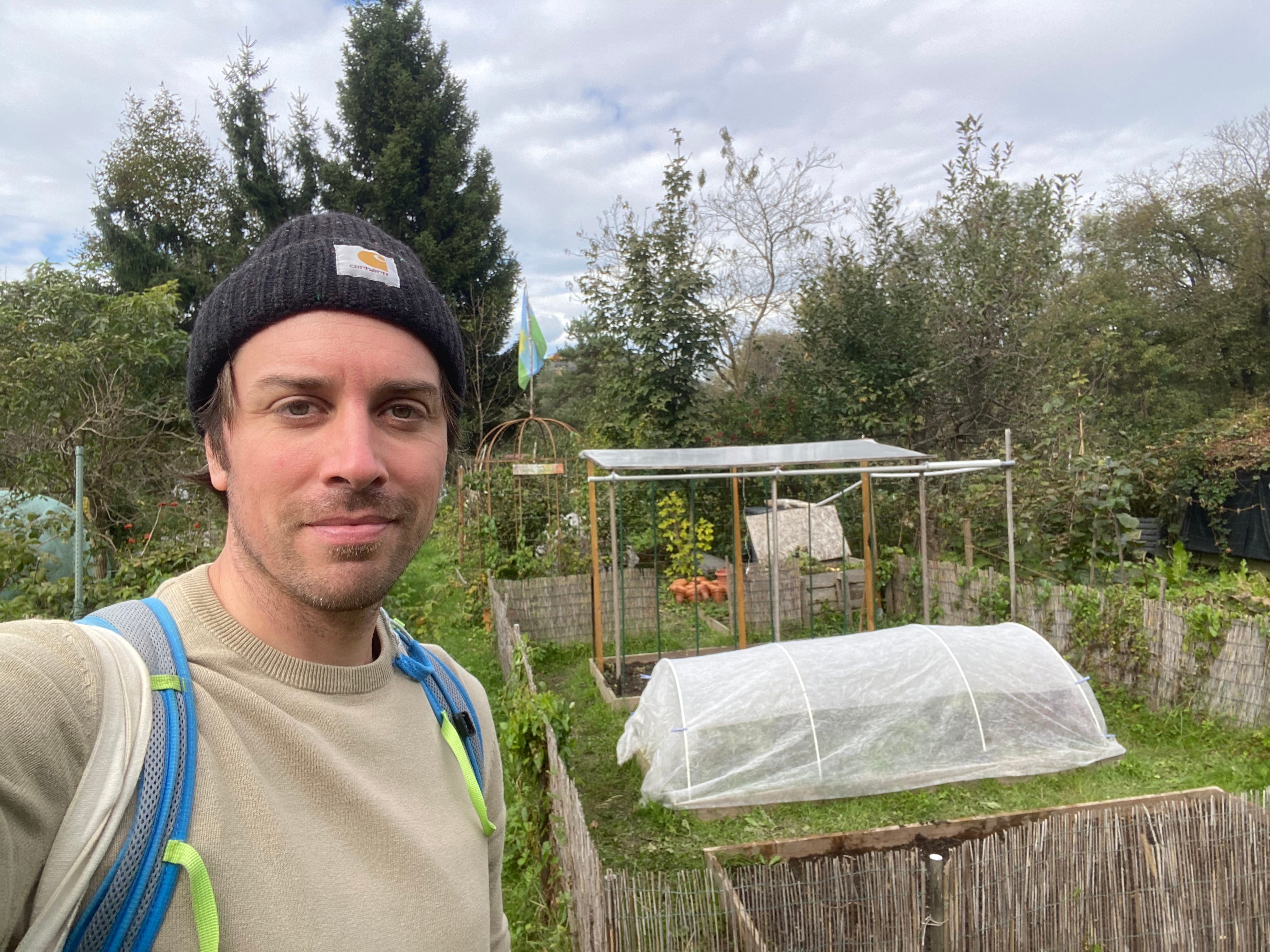
The other day, I went down to my small allotment garden to see how it was doing after the snow had melted. I hadn’t been there since before the end-of-year holidays and I didn’t know what to expect.
When I got there, I was pleasantly surprised to see the onions and garlic I had planted in the autumn were peeking out of the ground, their green shoots ready for the warmer days.
As I walked through the cold crisp air, listening to birds singing in the bushes close to me, I was filled with that unmistakable feeling:
Spring is around the corner!
And so, I thought it suitable to share with you my outlook on the importance of being in a garden and on how I use it as a pedagogical tool.
Even though I mainly work with children now, I think the lessons are as applicable to us adults (hell, maybe they’re even more important for us!).
So, have a read and let me know what you think.
One of the children had found something hidden amongst the lettuce.
With shouts of excitement, the other children ran over and looked in awe as the boy picked up a snail and watched it slither across his hand. Before I could say anything, the rest of the children had begun to rummage through the beds to find more.
It turns out children are very effective snail hunters.
So, although they are very effective pest-control, that’s not why I had a group of 10 year olds in my small allotment garden.
We were here because of a belief I have come to see as my fundamental pedagogical approach: trust that, when sparked, a child’s curiosity will fuel their desire to learn.
Children are natural learners
Children don’t need to be taught how to learn. All they need are environments and the support that encourage them to interact with the world around them.
They need time to observe and deconstruct patterns before them; the freedom to connect the relationships between cause and effect.
Driven by their curiosity, the learning will happen.
That’s why my pitch to parents was simple: your children will learn — not by sitting and thinking — but by doing, by experiencing, and by noticing.
That’s how, once a week, I pick up small groups of children from school and proceed to let their curiosity guide their learning.
The garden as a classroom
Most often, we go for walks through a local forested park, by the river that cuts through Ljubljana — or we go to my small allotment garden.
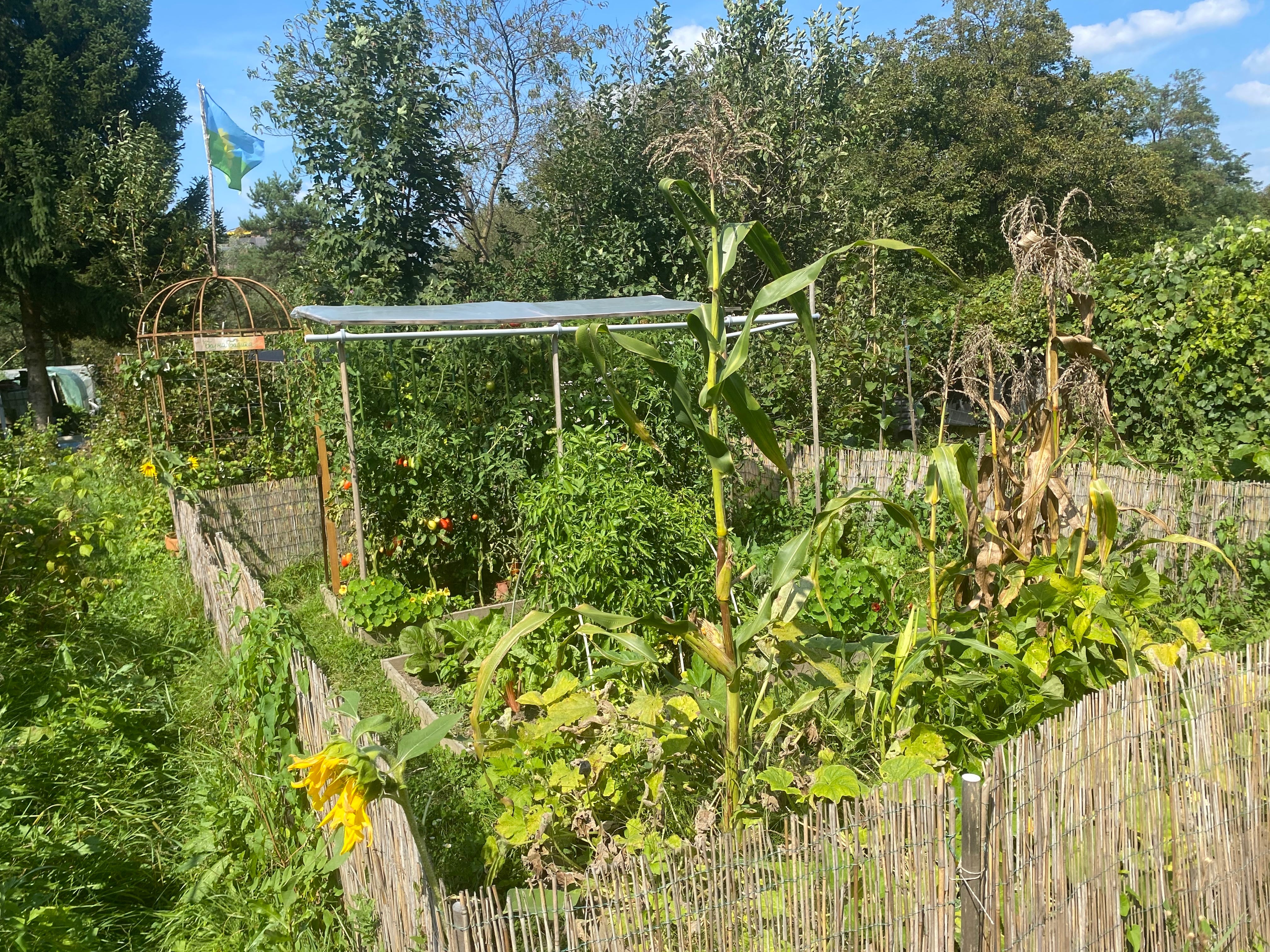
There, we do whatever — depending on the season and the weather — needs to be done. We weed, we plant, we water, we cut and we collect biomass for the compost.
I let the children decide what they want to do and, so far, I’ve never had a situation where a child didn’t want to do anything.
The group gets to work and everyone finds their place in it.
The children learn to communicate. They also learn about the rhythms of the garden and, most importantly, they get to witness.
Being outside, exposed to the elements and watching the seasons change, is not something that is taught on an intellectual level; it’s something that is felt.
Being in the garden helps to connect the dots.
A tiny speck of a seed grows into a vibrant green plant, out of which a flower, fruit or vegetable emerges.
It then turns brown and shrivels as it decomposes on the compost pile; a compost pile that becomes organic matter in which the following spring’s seeds are sown.
But it isn’t only about plants.
The rain gauge shows how many liters of water have fallen per square meter; the small flag atop a pole shows wind strength and direction; and the thermometer, hygrometer and barometer paint the invisible atmospheric picture.
And the presence of wildlife is everywhere, if only attention is paid to it.
The field mice nesting at the bottom of the compost bin. The bees buzzing in and out of flowers. The birds of prey circling high overhead.
But there is also something else: the tiger mosquitos that seem to be more numerous year upon year.
Their invasive presence in Europe, on the scale of human history, is extremely recent (only within the past three decades). Their long-term impact on our ecosystems remains to be seen.
But they are a reminder of the globalized world beyond this small garden and the container ships that brought them here.
Touch soil with your bare hands
Now, I cannot speak for the children but I trust that they’re taking something valuable from being in the garden. Something that will inform their intellectual growth and understanding of the world they live in.
In time, they will learn about climate change and the problems that face us. They will learn about the carbon cycle imbalance, about warming temperatures and extreme weather events.
But being in this garden is setting the foundations upon which that knowledge can make sense.
By touching the soil with their bare hands, a vital bond is created — one that goes beyond the intellect.
It’s showing them that they too are part of the natural world.
For all its benefits, our modern world has separated us from our natural environments, to the point that we no longer see ourselves part of them.
This is simply not true.
We are all an integral part of the complex and fragile systems that regulate Earth. We are not, in spite of our delusions, above them.
That’s why the first step in addressing the problem of climate change is to rediscover our emotional, physical — and dare I say — spiritual connection to the ecosystems we are a part of.
Planting a seed and eating its fruit can be a transformative way to do that.
Looking to Spring
Once the days start to lengthen again and slowly warm up the hardened ground, I will once again spend more time in the garden.
We will prepare the beds for sowing and will plan out which seeds to plant where. But we will continue to bear witness to the transformations happening around us and at the end of our fingertips.
The blackbird chirping in the bushes.
The delicate primrose flower blooming in small clusters.
These experiences will continue to shine an awareness on the fact that we are not separate from the earth.
We are part of it.
Till next time, I wish you all the very best! ☀️🚶➡️🌲
Ben
ps. Did you enjoy reading this?
If so, subscribe now and get my next post delivered straight to your inbox.
Really well articulated approach to experiencial learning. The idea that curiosity fuels learning when kids are given enviroments to explore (rather than being 'taught') is something I've seen work in practice too. That line about touching soil creating bonds beyond intellect is kinda understated but hugee. Once someone physically understands their place in an ecosystem, abstract climate concepts stop feeling so detached from daily life.
Beautiful!